Why Choose an Ultrafine Grinding Mill for Your Material Processing Needs?
In the world of material processing, the choice of equipment plays a crucial role. One pivotal option is the Ultrafine Grinding Mill. This technology can significantly enhance product quality and efficiency. Businesses seeking to optimize their processes often consider this mill.
The Ultrafine Grinding Mill offers precision and versatility. It caters to a wide range of materials, from minerals to chemicals. By achieving smaller particle sizes, it unlocks new possibilities in product applications. However, understanding its capabilities is essential. Not every material responds equally to ultrafine grinding. Factors such as hardness and moisture content can impact results.
Choosing the right mill requires careful consideration. It's vital to assess specific material characteristics and intended use. The Ultrafine Grinding Mill may not be the perfect fit for every situation. Thus, evaluating its strengths and limitations is key. With proper analysis, this milling solution can be a game changer in material processing.
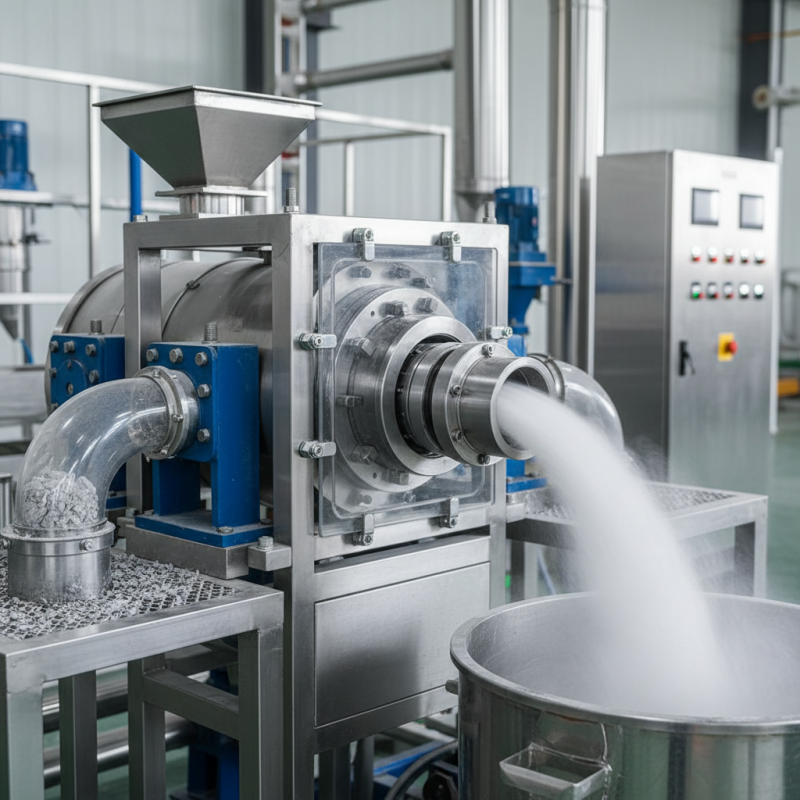
Understanding Ultrafine Grinding Mills and Their Applications
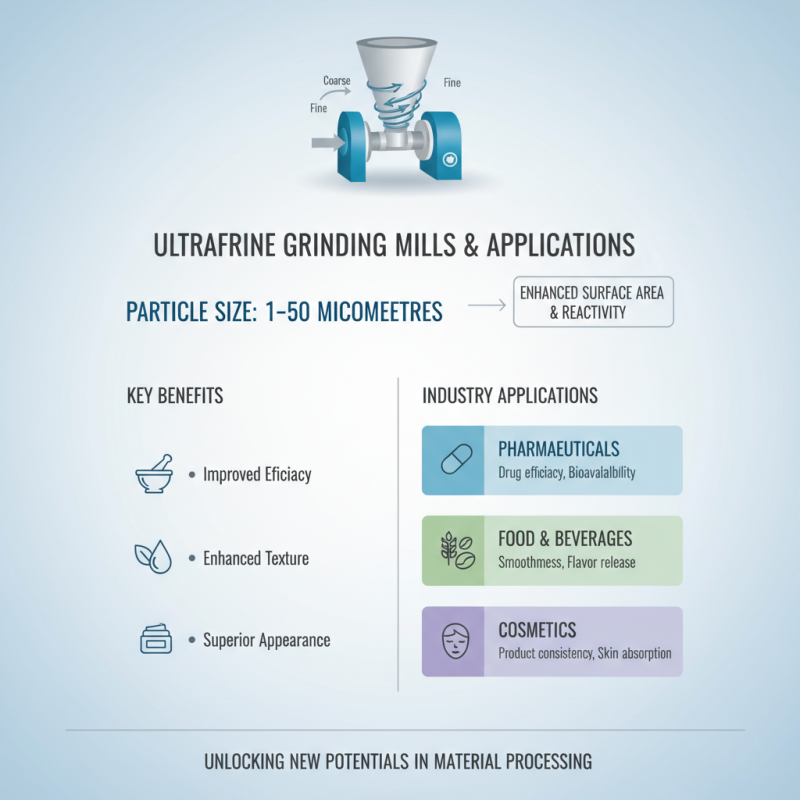
Ultrafine grinding mills play a crucial role in material processing across various industries. These machines can achieve particle sizes ranging from 1 to 50 micrometers, allowing for enhanced surface area and reactivity. This is essential for industries like pharmaceuticals, where precise particle size affects drug efficacy and bioavailability. Additionally, food and cosmetics industries benefit from finer particles that improve product texture and appearance.
Understanding the mechanics of ultrafine grinding is vital. The process often employs mechanical forces such as impact, shear, and compression. Materials undergo repeated collisions within the mill, effectively breaking them down to the desired fineness. However, challenges can arise. For example, heat generation might alter sensitive materials. Operators must monitor temperature closely to prevent quality loss.
Choosing an ultrafine grinding mill involves careful consideration of material properties and processing goals. Each application presents unique challenges. Understanding how different materials react to grinding aids is also important. This knowledge helps determine which configuration or technology will yield the best results. Experimentation may lead to unexpected outcomes, prompting a reevaluation of techniques used.
Key Advantages of Using Ultrafine Grinding Mills in Processing
Ultrafine grinding mills are essential tools for many industries. They provide a means to achieve fine particle sizes with consistency and efficiency. One of the key advantages of these mills is their ability to enhance the surface area of materials. This increased surface area leads to improved reactivity during processing. Additionally, ultrafine grinding can help in reducing the energy consumption of subsequent processes.
Tips: When selecting a mill, consider the material's properties. Harder materials may require specific adjustments to achieve optimal results.
Another notable benefit is the improved distribution of particle size in the final product. Producing uniform particles can help in achieving better performance in applications like pharmaceuticals and food processing. The fine particles produced in these mills often lead to smoother textures and enhanced bioavailability.
Tips: Always test smaller batches before full-scale production. This can save time and resources.
However, operating ultrafine grinding mills can come with challenges. Proper maintenance is critical to prevent wear and tear. Mismanagement can lead to unexpected downtime. Be mindful of these potential issues to ensure smooth operation and longevity of your equipment.
Why Choose an Ultrafine Grinding Mill for Your Material Processing Needs? - Key Advantages of Using Ultrafine Grinding Mills in Processing
| Advantage |
Description |
Applications |
| High Particle Size Reduction |
Ultrafine grinding mills can produce particles in the sub-micron range, enhancing the performance of the processed materials. |
Pharmaceuticals, Chemicals |
| Improved Product Quality |
The fine grinding process ensures uniformity and consistency in the product, which is crucial for high-quality end products. |
Food Products, Nutraceuticals |
| Energy Efficiency |
These mills can achieve the desired particle size with lower energy consumption compared to conventional grinding methods. |
Minerals, Powders |
| Versatility |
Ultrafine grinding mills can process a wide range of materials, including hard, brittle, and soft substances. |
Various Industries including Cosmetics and Electronics |
| Reduction of Contamination |
Processes can be designed to minimize contamination during grinding, ensuring purity in sensitive applications. |
Biotechnology, Food Industry |
Factors to Consider When Selecting an Ultrafine Grinding Mill
When selecting an ultrafine grinding mill, several key factors must be considered. One of the most critical aspects is the material's characteristics. Different materials exhibit varying hardness, moisture levels, and particle sizes. According to a report by the Institute of Particle Technology, hardness significantly affects grinding efficiency. Understanding these properties can help in choosing the right mill type.
Another factor to evaluate is the desired particle size and distribution. The goal may be to achieve a specific fineness for better performance in downstream applications. Research shows that materials ground to smaller sizes often react better in chemical processes, improving efficiency by up to 30%. Remember, achieving the right particle size may require multiple passes, influencing operational costs.
The cost of operation also plays a significant role. Ultrafine grinding can be energy-intensive. A study indicated that energy consumption could account for 40-60% of production costs in grinding operations. As such, not only must the initial investment be considered, but understanding long-term operational efficiencies is equally crucial. Balancing these factors can lead to better decision-making in selecting the right ultrafine grinding mill for specific needs.
Comparative Analysis: Ultrafine Grinding vs. Traditional Grinding Methods
Ultrafine grinding mills have gained attention for their ability to process materials more efficiently than traditional methods. According to industry reports, ultrafine grinding can achieve particle sizes as small as 1 micron, significantly improving the surface area for reactions. In contrast, traditional grinding methods may only reach levels around 10 to 20 microns, limiting their effectiveness in certain applications.
The distinct advantages of ultrafine grinding extend beyond particle size. Various studies indicate that this method can enhance the bioavailability of powders. For example, a report published in 2022 highlighted that ultrafine grinding increased the solubility of certain nutrients by over 50%. In industries like pharmaceuticals and food processing, such improvements can lead to better product effectiveness. However, achieving these results often requires careful optimization of the grinding conditions, underscoring the need for technical expertise in the process.
While ultrafine grinding offers clear benefits, it also poses challenges. The energy consumption tends to be higher compared to traditional methods. Some reports suggest that rolling a mill can consume up to 25% more energy than conventional milling. Manufacturers need to strike a balance between efficiency and cost. Analyzing the specific requirements of the material and application becomes critical. Investment in ultrafine grinding technology can be daunting, yet ignoring its advantages might hinder process optimization.
Common Industries Benefiting from Ultrafine Grinding Technology
Ultrafine grinding technology serves a wide range of industries. This advanced process enhances material properties by reducing particle size. Various sectors rely on it for improved quality and effectiveness.
The pharmaceutical industry greatly benefits from ultrafine grinding. This technique optimizes drug formulations. Smaller particles can enhance solubility and absorption rates. However, achieving the right particle size can be challenging. Continuous adjustments are often needed to meet specific standards.
In the food and beverage sector, ultrafine grinding is essential for creating fine powders. Foods like spices and sugar require uniformity for better flavor and texture. Yet, over-grinding can lead to undesirable characteristics, such as clumping. The balance between fineness and functionality must be carefully managed.