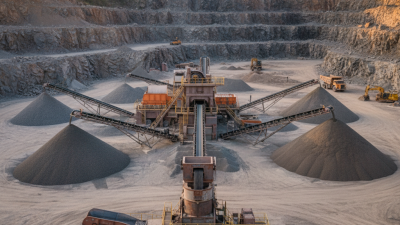
Choosing the best Secondary Crusher for 2026 is not a simple brand comparison. It is a production decision shaped by feed size, rock hardness, moisture, maintenance access, and local power costs.
The USGS Mineral Commodity Summaries 2025 estimates U.S. crushed stone production at about 1.5 billion metric tons in 2024. That volume reflects constant pressure on quarry operators to improve throughput and control operating costs. The UNEP Global Resources Outlook 2024 also warns that global material extraction could rise by approximately 60% by 2060 without stronger efficiency measures. These findings make secondary crushing increasingly important. A correctly selected cone crusher, impact crusher, or gyratory design can produce a more consistent feed for screening and final shaping. Small settings matter. A two-millimeter adjustment can change product gradation, liner wear, and energy use.
Yet, “best” remains imperfect. A high-capacity cone crusher may suit hard granite, but struggle with sticky, wet feed. An impact crusher can deliver excellent particle shape, but its blow bars may wear faster in abrasive stone. Buyer experience often reveals gaps that catalog figures hide. Downtime after a failed bearing can erase theoretical efficiency within hours.
This guide compares key Secondary Crusher options for global buyers in 2026. It considers capacity, reduction ratio, automation, wear protection, service support, spare-parts availability, and total cost of ownership. Data from manufacturers, USGS reports, and international resource studies supports the discussion. Conditions still vary. Site testing remains essential.
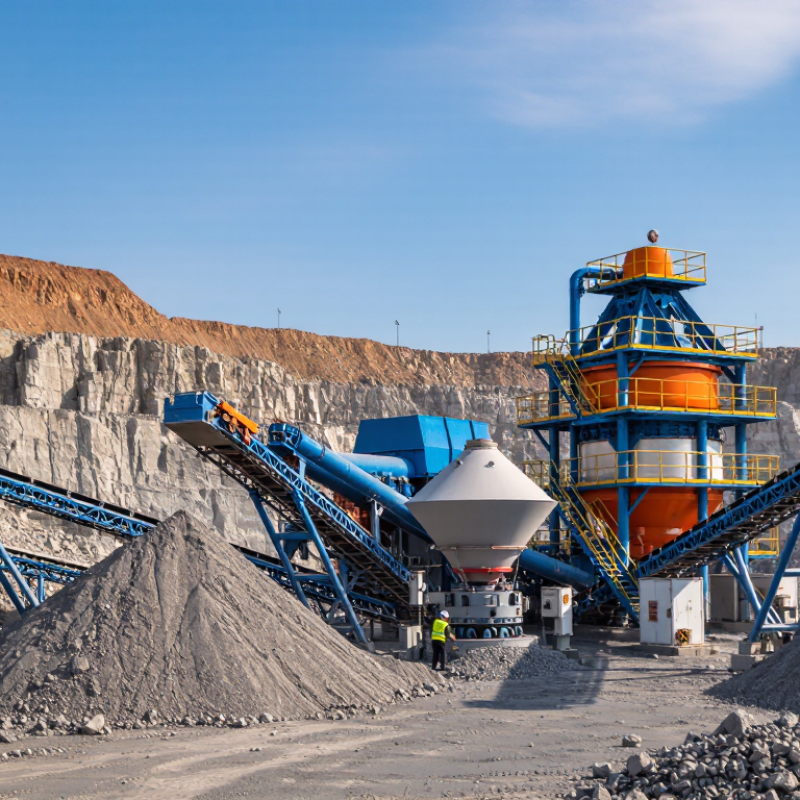
A secondary crusher reduces material after primary crushing, bringing coarse rock closer to the size required for screening or final processing. It sits between the primary crusher and downstream equipment, such as vibrating screens, conveyors, or tertiary crushers.
For example, a primary crusher may produce irregular 150-millimeter stone; a secondary unit can reduce it to a more consistent feed for the next stage.
The right machine depends on the rock, feed size, moisture, and target product.
Cone crushers are commonly selected for hard, abrasive material, while impact crushers can suit softer rock or applications needing a more cubical shape.
These are practical tendencies, not fixed rules. Actual results depend on machine settings, wear condition, and plant layout. A crusher that performs well on paper may struggle if its feed is uneven. That detail is easy to underestimate.
Tips: Check the measured feed and required output before comparing equipment. Review expected throughput, discharge size, and access for routine maintenance. Keep sample material from the quarry if possible; a short test can reveal issues that a specification sheet cannot. Leave room for adjustment. Real plants are rarely perfect.
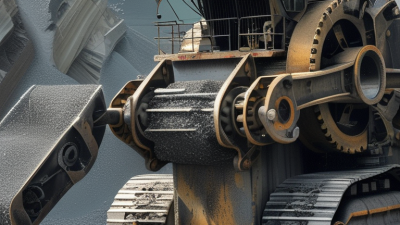
Global buyers in 2026 can choose from several secondary crusher types, each suited to different materials and production goals. Cone crushers remain practical for hard, abrasive rock, especially when a consistent, cubical product is required. They use compression, so wear rates can be predictable when feed size stays controlled. However, they may need skilled adjustment and regular liner checks.
Impact crushers use high-speed blow bars to reshape softer stone, recycled concrete, and limestone. They often deliver strong particle shape with fewer crushing stages. Moist or sticky feed can create blockages, though. Horizontal shaft models suit medium-duty applications, while vertical shaft models are useful when manufactured sand or precise shaping matters. Roll crushers offer low-noise operation and a controlled reduction ratio for softer, fragile materials.
Choice depends on more than capacity. Buyers should compare feed size, moisture, abrasiveness, required output, power supply, spare-part access, and local service skills. Ask for documented test results, not only catalog figures. Safety guarding, emergency stops, dust control, and conformity with destination-market requirements also deserve careful review. A smaller machine may outperform a larger one when feeding is steady. That is easy to overlook. From practical plant evaluations, poor feed control often causes more trouble than crusher design. No type wins every site. A trial with representative material remains the most reliable check.
2026 Best Secondary Crusher for Global Buyers?
How Do Feed Material and Product Requirements Shape Crusher Selection?
The best secondary crusher in 2026 depends less on brochures and more on feed conditions. Hard, abrasive stone usually requires compression crushing with strong wear protection. Softer limestone may suit impact crushing when a cubical product is important. Moisture changes everything.
Measure the feed before choosing equipment. Record the maximum lump size, average size, moisture level, clay content, and abrasiveness. A 600-millimeter feed can overload a crusher designed for smaller material. Sticky clay can also block chutes and reduce output. Test before buying.
Product requirements are equally important. Road base may tolerate more fines, while concrete aggregate often needs controlled shape and grading. A tight closed-side setting can improve product size, but it may increase power use and wear. Experienced operators check the full circuit, not only the crusher. Screens, conveyors, and dust control all affect real production.
A mistake I still see is selecting capacity from a catalog alone. Rated capacity may assume ideal feed and regular maintenance. Actual production can fall sharply with wet material or uneven loading. No selection rule is perfect. Sampling and pilot testing may cost time, but they expose weak assumptions before installation. A crusher that matches the material, target product, and service conditions usually delivers steadier performance across changing markets.
Representative secondary-crushing design scenarios show why crusher selection depends on both feed top size and the required product P80. Hard, abrasive rock generally favors compression crushing, while softer or less abrasive materials can support impact-based solutions. The reduction ratio is calculated from feed top size divided by target product P80; actual performance depends on material properties, chamber design, closed-side setting, and screening efficiency.
Values are realistic planning references rather than manufacturer ratings. Final equipment sizing should be confirmed through site testing and process simulation.
Choosing a secondary crusher depends on rock hardness, moisture, feed size, and the required product shape. Cone crushers suit hard, abrasive stone and steady, high-volume production. Their chamber compresses material, producing reliable gradation with controlled closed-side settings. Impact crushers use kinetic energy. They often create more cubical particles, which benefit asphalt and concrete mixes. However, their blow bars can wear quickly on highly abrasive rock.
USGS Mineral Commodity Summaries 2024 reported about 1.5 billion metric tons of crushed stone produced in the United States during 2023. That volume shows why uptime, wear cost, and product consistency matter. Roll crushers can handle some sticky materials with fewer fines, while hammer crushers suit softer, less abrasive feed. A vertical shaft impact crusher can improve shaping, but it may increase power use. The best choice is rarely universal. Even experienced engineers can misjudge moisture or liner life.
Tips:
Test the exact feed before purchase. Measure silica content, bulk density, maximum lump size, and moisture. Compare cost per finished ton, not only the purchase price. Request a gradation sample after several operating hours. A crusher that looks efficient in a brochure may struggle beside a wet screen. Also review local service capacity, spare-part delivery, and operator training. These practical details often decide whether a secondary circuit remains stable during the rainy season.
Before purchasing a secondary crusher, match its design to the material and the required product size. Check feed opening dimensions against the largest pieces leaving the primary crusher. A few oversized rocks can cause blockages, even when average feed size looks suitable. Hard, abrasive stone also wears crushing surfaces faster than softer material. Ask for wear-part specifications and realistic replacement intervals.
Capacity matters, but a single tonnes-per-hour figure can mislead. Request performance data for your feed size, moisture level, and target output. Compare power demand, expected product shape, and adjustment range. A crusher that produces consistent aggregate may reduce recirculation and help downstream screens. Inspect access for routine maintenance: Can workers reach liners, bearings, and inspection points safely? Small details count. Confirm the required foundation, drive arrangement, and electrical supply before installation. A mismatch can add cost and delay commissioning.
Ask how the machine handles tramp material and uneven feed, and what operating limits apply. Review service documentation, spare-part availability, and the supplier’s technical support in your region. Request references from operations processing similar rock, not just similar tonnage. If possible, inspect a working unit or trial representative material. It is easy to overvalue headline capacity; I would also check the actual product gradation under steady operation. No specification sheet captures every site condition, and that uncertainty deserves a candid discussion.
| Crusher type | Typical secondary-stage application | Material and feed considerations | Product characteristics | Key operating considerations | What buyers should verify |
|---|---|---|---|---|---|
| Cone crusher | Common choice for secondary crushing in hard-rock and aggregate circuits, often following a primary jaw crusher. | Generally suited to hard, abrasive, competent rock. Feed should be prepared within the machine’s specified size range and distributed consistently. | Typically produces a relatively well-graded product. Particle shape depends on the feed, chamber, settings, and operating conditions. | Performance depends on suitable feed distribution, chamber selection, closed-side setting, and control of tramp material. Wear parts are a significant operating consideration. | Check the permitted feed size, required product gradation, adjustment range, liner life assumptions, tramp-release or protection system, and service-part availability. |
| Horizontal-shaft impact crusher (HSI) | Used for secondary crushing where impact reduction and a cubical aggregate product are important. | Often suitable for softer to medium-hard, less abrasive materials, including many limestone applications. Highly abrasive or very hard feed can increase wear. | Impact crushing can produce a cubical shape and a higher proportion of fines than compression crushing; results vary with material and settings. | Rotor, blow-bar, and impact-liner wear should be considered. Moisture, feed consistency, and material abrasiveness can affect operation and costs. | Ask for wear estimates based on the actual material, allowable feed size, product-size results, adjustment options, and the time and equipment needed for routine wear-part changes. |
| Secondary jaw crusher | Can be used for further size reduction where a simple compression crusher is appropriate, although cone crushers are more common in many hard-rock secondary circuits. | Generally handles hard, abrasive material well, subject to the crusher’s design limits. Confirm feed gradation and maximum lump size rather than relying on nominal descriptions. | Produces a product influenced by jaw profile, setting, feed characteristics, and operation; particle shape may differ from that of an impact crusher. | Check capacity at the required setting, feed arrangement, wear-part access, and whether the resulting gradation suits the next process stage. | Confirm the machine is specifically sized for the intended secondary duty, and request application data for the actual feed and target product rather than primary-duty figures. |
| Roll crusher | Used in selected applications where controlled size reduction and a relatively simple product-size arrangement are needed. | More appropriate for materials and duties within the particular machine’s design range. Feed strength, abrasiveness, moisture, and the presence of uncrushable material require careful review. | Can provide controlled reduction, but product distribution and fines depend on roll design, gap, feed, and operating conditions. | Capacity and wear behavior are application-specific. Sticky feed or tramp material may create operating challenges if the equipment is not designed for them. | Request test or application data for the actual material, and verify roll-gap adjustment, overload protection, feed limits, and maintenance requirements. |
Selection note: There is no single best secondary crusher for every operation. Compare options using representative feed samples, required throughput and product gradation, material abrasiveness and moisture, total operating and maintenance costs, site power and space, safety provisions, and local access to parts and technical support. Actual capacity, feed limits, and product results are model- and application-specific and should be confirmed with documented application data.